
Why Diabetics Worldwide Are Turning to Amla
The Science Behind Natural Blood Sugar Support & Metabolic Rejuvenation
RESEARCH
Dt. Swati Pandey
3/26/20267 min read
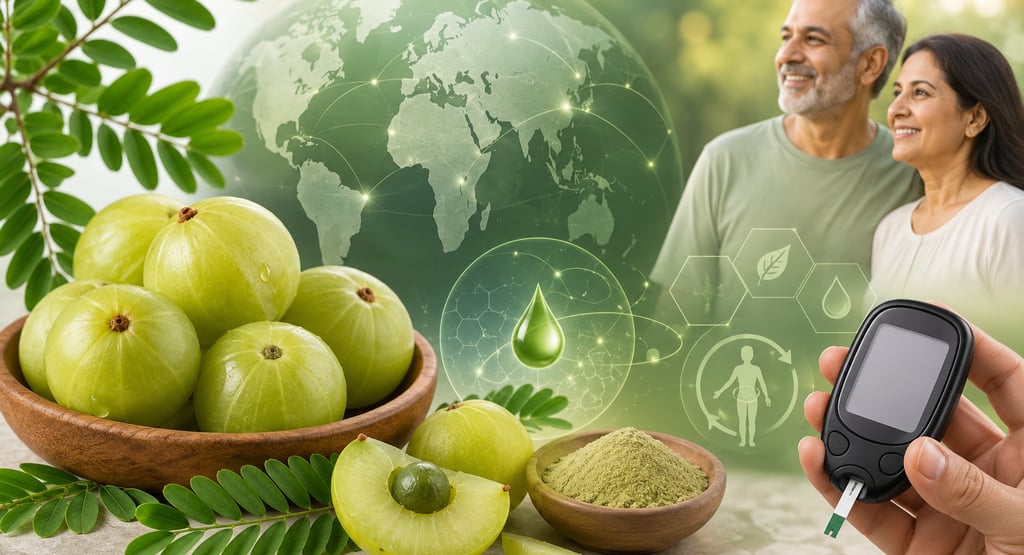
Why Diabetics Worldwide Are Turning to Amla: The Science Behind Natural Blood Sugar Support & Metabolic Rejuvenation
A Promotional Health Feature Inspired by the Philosophy: “Independence from Dependence”
“Diabetes is not just a sugar problem. It is the mother of many chronic diseases.”
For many people, diabetes begins silently.
A little fatigue. A little weight gain. Occasional brain fog. Slightly elevated sugar levels.
At first, it seems manageable.
But over time, uncontrolled diabetes slowly begins affecting almost every major system of the body.
It damages nerves. It weakens the kidneys. It affects eyesight. It disturbs digestion. It increases cholesterol. It stresses the liver. It hardens arteries. It accelerates aging.
That is why diabetes is often called:- “The Mother of Many Diseases.”
And this is exactly where one ancient Indian superfruit — Amla (Indian Gooseberry) — is gaining global scientific attention.
Today, high-potency Amla formulations are becoming increasingly popular among people seeking natural support for:
Blood sugar balance
Insulin sensitivity
Liver health
Cholesterol management
Energy and vitality
Healthy aging
One such emerging Ayurvedic nutraceutical is:
Immuno-Amla
A concentrated Amla-based formulation designed to support metabolic wellness, antioxidant defense, and long-term vitality.
With high-potency tannins, antioxidant-rich Amla extract, and traditional Ayurvedic inspiration, products like Immuno-Amla are part of a growing movement toward preventive wellness and metabolic support.
For more than 5000 years, Ayurveda has described Amla as a Rasayana — a rejuvenator believed to restore vitality, strengthen organs, support longevity, and protect the body against degeneration.
Today, modern scientific research is beginning to validate many of these traditional observations.
But what makes Amla truly fascinating is this:-nAmla is not only being studied for sugar control.
It is being researched for its potential role in:
Improving insulin sensitivity
Supporting liver function
Reducing oxidative stress
Balancing cholesterol and triglycerides
Supporting vascular flexibility
Protecting nerves
Supporting digestion
Promoting skin and hair health
Supporting healthy aging
In simple words:
Amla represents the idea of “Independence from Dependence.”
Not merely surviving disease. But supporting the body before irreversible damage begins.
The Real Root of Type 2 Diabetes: Insulin Resistance
Most people think diabetes simply means high blood sugar.
But the deeper problem in Type 2 diabetes is often:
Insulin Resistance.
The pancreas may still produce insulin. But the body stops responding properly to it.
Think of insulin as a key. And the body’s cells as locked doors.
In insulin resistance:
The key exists
But the lock does not open efficiently
As a result:
Sugar keeps circulating in the blood
Cells fail to absorb glucose efficiently
Energy production becomes impaired
Fat accumulation increases
Inflammation rises
Organ damage gradually begins
This prolonged exposure to high blood sugar eventually leads to severe complications.
Why Diabetes Becomes the “Mother of Diseases”
When blood sugar remains uncontrolled for years, it starts damaging the body system by system.
1. Diabetic Neuropathy
Damage to nerves causing:
Burning sensations
Tingling
Numbness
Weakness
Reduced sensation
2. Diabetic Nephropathy
Kidney damage caused by chronic inflammation, oxidative stress, and vascular injury.
3. Diabetic Retinopathy
Damage to retinal blood vessels affecting vision and eye health.
4. Diabetic Gastroparesis
Delayed stomach emptying caused by nerve damage affecting digestion.
And diabetes does not stop there.
It also contributes to:
Fatty liver disease
High cholesterol
High triglycerides
Hypertension
Cardiovascular disease
Hair thinning
Premature aging
Brain fog
Chronic inflammation
Reduced energy levels
This is why managing diabetes is not only about lowering sugar temporarily.
The real goal is restoring metabolic balance.
And this is where Amla becomes deeply relevant.
Why Products Like Immuno-Amla Are Getting Attention
Modern diabetes management often focuses heavily on controlling sugar numbers.
But people today are increasingly searching for something deeper:
Support for the root metabolic imbalance.
That is why Amla-based wellness supplements are gaining popularity.
The featured formulation highlights several important benefits associated with Amla research:
Support for healthy blood sugar
Improved insulin sensitivity
Rich antioxidant profile
High tannin potency
Vitamin C support
Metabolic wellness support
What makes this approach different is the philosophy behind it.
Instead of focusing only on temporary sugar suppression, the focus shifts toward:
Metabolic correction
Organ support
Oxidative stress reduction
Healthy aging
Long-term vitality
This aligns strongly with the Ayurvedic Rasayana concept of rejuvenation.
What Exactly Is Amla?
Amla, scientifically known as Phyllanthus emblica or Emblica officinalis, is a nutrient-rich fruit native to India.
It is naturally rich in:
Vitamin C
Polyphenols
Gallic acid
Ellagic acid
Tannins
Flavonoids
Emblicanins
Powerful antioxidants
In Ayurveda, Amla is classified as a:
“Rasayana” — A Rejuvenator
Meaning:
It supports vitality
Promotes resilience
Supports tissue repair
Helps healthy aging
Strengthens the body against degeneration
Modern science now suggests that many of these effects may be connected to Amla’s antioxidant, anti-inflammatory, metabolic, and vascular-supportive properties.
Step One: Amla & Insulin Sensitivity
One of the most important areas of modern Amla research is its potential role in improving insulin sensitivity.
Studies suggest that compounds present in Amla may help:
Improve glucose metabolism
Reduce oxidative stress
Support pancreatic health
Improve glucose uptake into cells
Reduce inflammation associated with insulin resistance
Why is this important?
Because when insulin sensitivity improves:
Sugar moves more efficiently from blood into cells
Muscles utilize glucose better
Blood sugar stabilizes more naturally
Energy production improves
Metabolic stress decreases
Instead of only suppressing sugar temporarily, improving insulin sensitivity targets one of the core mechanisms behind Type 2 diabetes.
This is one reason Amla is receiving increasing attention in metabolic health research.
Step Two: Amla & Liver Health
The liver plays a massive role in diabetes.
It regulates:
Blood sugar balance
Fat metabolism
Cholesterol production
Triglycerides
Hormonal signaling
When liver function becomes impaired:
Fatty liver develops
Insulin resistance worsens
Cholesterol rises
Triglycerides increase
Sugar regulation becomes disturbed
Many diabetic patients eventually develop liver dysfunction.
Research suggests that Amla’s antioxidant and hepatoprotective properties may help support liver health by:
Reducing oxidative stress
Supporting healthy fat metabolism
Protecting liver cells
Reducing inflammatory burden
A healthier liver may contribute to:
Better glucose balance
Improved lipid profile
Reduced metabolic overload
This matters because diabetes is not an isolated disease. It affects the entire metabolic system.
Step Three: Amla, Cholesterol & Cardiovascular Protection
One of the greatest dangers in diabetes is cardiovascular disease.
Persistent high blood sugar damages blood vessels over time.
This increases the risk of:
Heart attack
Stroke
Arterial blockage
High blood pressure
Poor circulation
Several studies suggest that Amla supplementation may help improve:
LDL cholesterol
HDL cholesterol
Triglycerides
Oxidative stress markers
Inflammatory markers
Research has also explored Amla’s possible role in supporting endothelial function.
Why is endothelial function important?
The endothelium is the inner lining of blood vessels. Healthy endothelial function helps arteries remain:
Flexible
Elastic
Responsive
Poor endothelial function contributes to:
Arterial stiffness
Hypertension
Atherosclerosis
Reduced circulation
Some studies suggest that Amla may support nitric oxide activity.
Nitric oxide helps blood vessels relax and maintain flexibility.
When arteries remain flexible:
Blood pressure may stay healthier
Vascular stiffness reduces
Circulation improves
Cardiovascular strain decreases
This becomes especially important in diabetes because vascular damage is one of the biggest long-term risks.
Amla & Diabetic Neuropathy
Diabetic neuropathy is one of the most painful complications of long-term uncontrolled diabetes.
Amla contains antioxidant compounds such as:
Gallic acid
Polyphenols
Tannins
These compounds are being studied for their potential neuroprotective properties.
Oxidative stress and inflammation are major contributors to nerve damage.
By helping reduce oxidative burden, antioxidant-rich foods may support overall nerve health.
Ayurvedic traditions have long associated Amla with vitality, tissue repair, and nervous system balance.
Modern research is now exploring possible biological mechanisms behind those observations.
Amla & Kidney Protection
The kidneys are extremely vulnerable to prolonged high blood sugar.
Over time, diabetes creates:
Inflammation
Oxidative stress
Vascular damage
Filtration dysfunction
This gradually leads to diabetic nephropathy.
Research into Amla suggests its antioxidant profile may help reduce oxidative burden associated with chronic metabolic disease.
Some studies indicate possible renal protective effects.
While more human clinical research is needed, antioxidant-rich dietary support may help reduce metabolic stress on kidney tissue.
Amla & Eye Health
Diabetic retinopathy is among the most feared complications of diabetes.
The retina contains delicate blood vessels that are highly sensitive to prolonged high blood sugar.
Over time this can lead to:
Blurred vision
Retinal damage
Visual impairment
Progressive eye disease
Traditionally, Ayurveda has associated Amla with eye health.
Modern researchers attribute part of this interest to:
Antioxidant effects
Polyphenol content
Reduction in oxidative stress
Vascular support mechanisms
Since oxidative damage plays a major role in retinal injury, antioxidant-rich foods may support long-term eye health.
Amla, Digestion & Diabetic Gastroparesis
Many diabetic patients suffer from:
Constipation
Bloating
Hyperacidity
Delayed digestion
Gastric discomfort
This often happens because prolonged diabetes damages the vagus nerve, which helps regulate digestion.
When stomach emptying slows down, digestive discomfort increases.
Traditionally, Amla has been used for digestive balance.
Its antioxidant and anti-inflammatory properties may help support gastrointestinal health.
People commonly report:
Better digestion
Reduced bloating
Improved bowel regularity
Improved digestive comfort
However, individual responses vary.
Amla, Skin, Hair & Healthy Aging
Amla is not only discussed in relation to disease. It is also associated with rejuvenation.
It is traditionally linked with:
Healthy skin
Hair strength
Collagen support
Cellular protection
Reduced oxidative aging
Natural glow
Why?
Because oxidative stress accelerates aging.
Free radical damage affects:
Skin elasticity
Hair follicles
Tissue repair
Cellular regeneration
Amla’s antioxidant-rich profile may help reduce oxidative stress associated with premature aging.
Gallic acid and polyphenols are particularly interesting in anti-aging research.
This is one reason Ayurveda described Amla as a rejuvenator thousands of years ago.
Amla Across Every Stage of Life
One of the most powerful aspects of Amla is that its relevance changes through different life stages.
Teenagers & Students
Modern life creates stress early:
Brain fog
Screen fatigue
Poor sleep
Stress
Junk food habits
Amla’s nutrient-rich profile may support:
Eye health
Cognitive clarity
Energy balance
General resilience
Working Professionals
Long screen time, stress, irregular meals, and sedentary lifestyles increase metabolic burden.
Antioxidant-rich nutrition may help support healthier long-term resilience.
Adults Over 40
This is often when:
Blood sugar rises
Cholesterol increases
Fatty liver develops
Blood pressure rises
Cardiovascular risk increases
Lifestyle correction becomes essential.
Older Adults
Healthy aging is not merely about living longer. It is about:
Staying active
Preserving mobility
Maintaining independence
Protecting organ function
Reducing disease-driven dependency
And this is where the message becomes powerful:
“Independence from Dependence.”
The Deeper Philosophy: Rejuvenation vs Symptom Suppression
Modern lifestyles are producing:
Earlier diabetes
Earlier fatty liver
Earlier hypertension
Earlier burnout
Earlier metabolic dysfunction
Many people are surviving. But not truly thriving.
This is why the concept of rejuvenation is becoming relevant again.
Not as blind belief. Not as mythology. But as a science of resilience.
Amla represents a larger philosophy:
Strengthen the body before irreversible damage occurs.
Support metabolism. Reduce oxidative stress. Protect vital organs. Support repair. Preserve vitality.
That is real preventive health.
Important Reality Check
Amla is powerful. But it is not magic.
It should never replace:
Medical advice
Doctor supervision
Prescribed medication
Lifestyle correction
Exercise
Sleep
Healthy nutrition
No single food can reverse years of metabolic damage overnight.
However, supportive daily habits matter.
And among natural foods, Amla stands out because it may support multiple systems simultaneously:
Metabolic health
Liver function
Oxidative balance
Vascular function
Digestion
Cellular resilience
That is what makes it unique.
Common Ways People Consume Amla
Amla is commonly consumed as:
Fresh fruit
Amla juice
Amla powder
Dried Amla
Amla murabba
Herbal formulations
Capsules
Chyawanprash
Suitability and dosage vary depending on health conditions.
People with:
Diabetes
Kidney disease
Digestive disorders
Medication use
Bleeding disorders
should consult healthcare professionals before starting supplements or major dietary changes.
Why This Message Matters Today
We are living in an age of:
Early diabetes
Chronic stress
Sedentary lifestyles
Screen fatigue
Fatty liver
High cholesterol
Poor sleep
Premature aging
People are no longer looking only for treatment.
They are looking for:
Prevention
Rejuvenation
Longevity
Energy
Vitality
Independence
That is why Ayurvedic wellness formulations inspired by Amla are becoming increasingly relevant in modern life. Not because they promise miracles. But because they support the body’s natural resilience.
Products like Immuno-Amla position themselves around this larger philosophy:
Supporting the body before disease takes control.
Final Thought
Diabetes is not merely high sugar. It is a slow disruption of the body’s balance.
And true health is not simply surviving with disease. It is maintaining:
Energy
Strength
Clarity
Mobility
Vitality
Independence
For centuries, Ayurveda respected Amla as a rejuvenating fruit.
Today, modern science is beginning to validate many of those traditional observations.
From insulin sensitivity to liver support, from vascular protection to antioxidant defense, from digestion to healthy aging — Amla is emerging as one of the most fascinating functional foods in metabolic health research.
Maybe the goal is not only a longer life.
Maybe the goal is:
Independence from Dependence.
Research & Scientific Basis
This article was developed using information from:
Peer-reviewed reviews on Emblica officinalis (Amla)
Clinical studies on glucose metabolism and oxidative stress
Research on endothelial function and vascular health
Reviews on liver health and metabolic syndrome
Studies on polyphenols, gallic acid, and antioxidant mechanisms
Traditional Ayurvedic literature discussing Rasayana therapy
Disclaimer
This article is for educational and informational purposes only.
It does not diagnose, treat, cure, or prevent any disease.
Amla should not replace prescribed medication or professional medical advice. Individuals with medical conditions should consult qualified healthcare professionals before beginning any supplement or major dietary intervention.
Please refrain from using or replicating any images or content from this website without obtaining written authorization.
Copyright © 2026 - All rights reserved by SP Diet Confluence
Important Links
Follow Us