
Fibremaxxing
The Smart Way to Improve Your Health, One Meal at a Time
Dt. Swati Pandey
6/30/20263 min read


Fibremaxxing: The Smart Way to Improve Your Health, One Meal at a Time
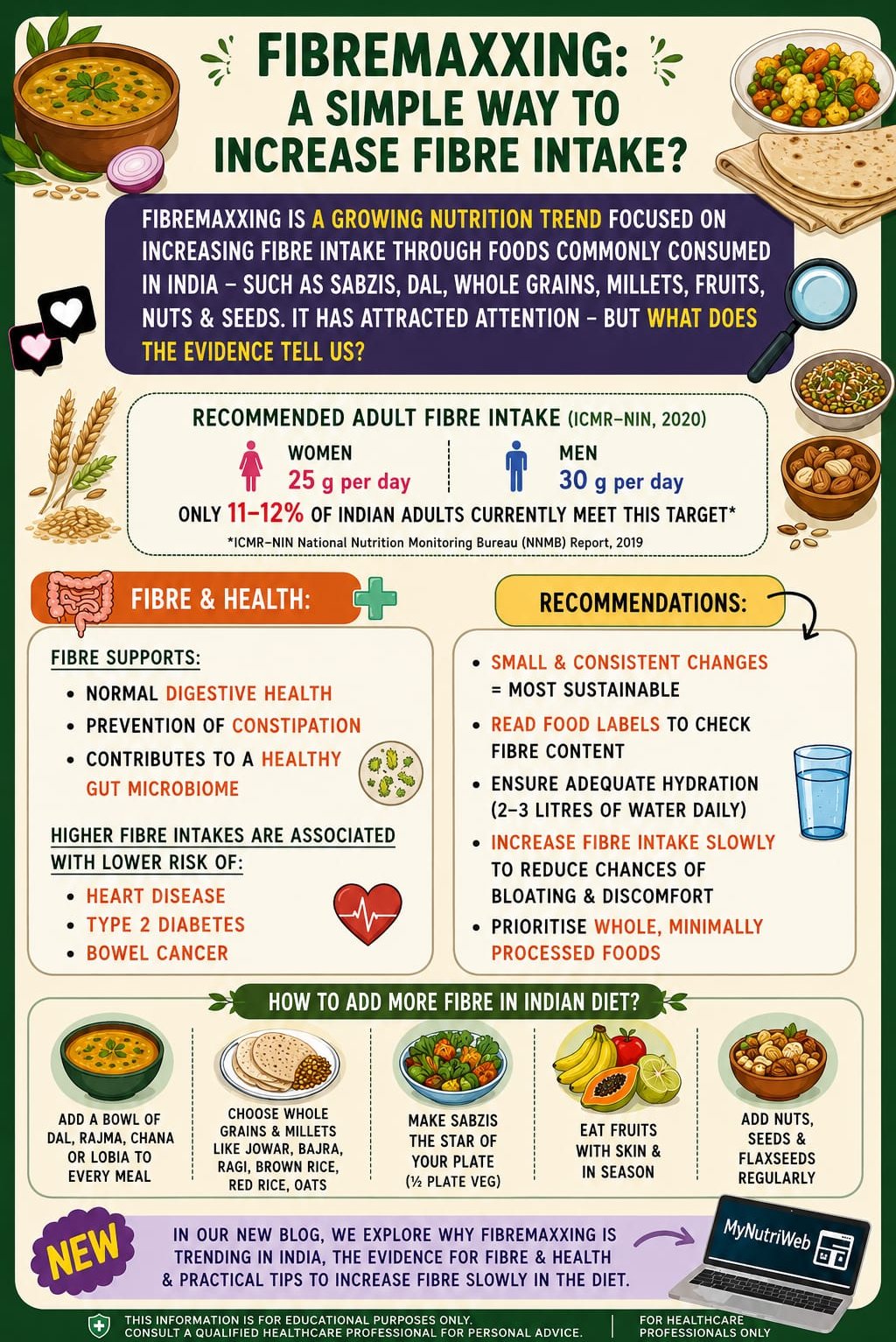
In recent years, "Fibremaxxing" has become one of the most talked-about nutrition trends. Despite the catchy name, the idea is simple: make fibre-rich foods a bigger part of your daily diet.
Instead of relying on supplements or restrictive eating plans, Fibremaxxing encourages consuming more natural plant-based foods such as fruits, vegetables, whole grains, legumes, nuts, and seeds. It's an easy lifestyle change that can significantly improve your digestive health, metabolism, heart health, and overall well-being.
Why Is Fibre So Important?
Dietary fibre is the indigestible part of plant foods. While our body cannot digest it, the bacteria living in our gut can. This interaction plays a crucial role in maintaining digestive health and supporting multiple body functions.
Unfortunately, most people consume far less fibre than recommended. Increasing fibre intake is one of the simplest dietary improvements you can make for long-term health.
Health Benefits of a High-Fibre Diet
1. Supports Healthy Digestion
Fibre promotes regular bowel movements, prevents constipation, and helps maintain a healthy digestive system. Insoluble fibre adds bulk to stools, while soluble fibre nourishes beneficial gut bacteria.
A healthy gut microbiome has been associated with stronger immunity, better digestion, and improved metabolic health.
2. Helps with Weight Management
If you're trying to lose weight or maintain a healthy weight, fibre can be your best friend. High-fibre foods:
Keep you full for longer.
Slow down digestion.
Reduce unnecessary snacking.
Help regulate appetite hormones such as GLP-1 and PYY.
Research has consistently shown that people consuming more fibre often have lower body weight, BMI, and waist circumference.
3. Improves Heart Health
Soluble fibre found in oats, beans, lentils, and several fruits helps lower LDL ("bad") cholesterol levels by reducing cholesterol absorption in the intestine.
Regular fibre intake is also associated with a reduced risk of cardiovascular disease.
4. Better Blood Sugar Control
Fibre slows the absorption of carbohydrates, preventing sudden spikes in blood glucose levels. This makes fibre-rich meals especially beneficial for individuals with diabetes, prediabetes, or insulin resistance.
5. Lowers the Risk of Certain Diseases
A diet rich in fibre has been linked to a lower risk of:
Type 2 Diabetes
Cardiovascular disease
Colorectal (bowel) cancer
Obesity
Understanding the Two Types of Fibre
Soluble Fibre
This type dissolves in water to form a gel-like substance. It slows digestion, supports healthy cholesterol levels, nourishes gut bacteria, and improves blood sugar regulation.
Good sources include:
Oats
Apples
Citrus fruits
Beans
Lentils
Chia seeds
Flaxseeds
Insoluble Fibre
This type does not dissolve in water. It increases stool bulk and promotes regular bowel movements.
Good sources include:
Whole wheat
Brown rice
Vegetables
Nuts
Seeds
Fruit skins
Most natural plant foods provide both types of fibre, making variety the key to good health.
Easy Ways to Start Fibremaxxing
Increasing fibre doesn't require a complete diet makeover. Small, consistent changes are often the most effective.
Try these simple habits:
Begin your morning with oats topped with chia or flaxseeds and fresh fruits.
Replace white rice with brown rice or millets.
Include lentils, beans, or chickpeas in at least one meal daily.
Snack on fruits instead of processed foods.
Add salads or cooked vegetables to every lunch and dinner.
Choose whole-grain bread, pasta, and cereals whenever possible.
Fibre-Rich Foods Worth Adding Daily
Chia Seeds
Flaxseeds
Lentils
Chickpeas
Oats
Brown rice
Sweet potato
Apples
Kiwi
Berries
Broccoli
Carrots
Whole wheat products
A Sample High-Fibre Day
Breakfast Oats cooked with chia seeds, berries, and nuts.
Lunch Mixed vegetable salad with chickpeas or lentils, accompanied by whole grains.
Dinner Whole wheat pasta or brown rice with vegetables and pulses.
These simple choices can easily help you approach the recommended daily fibre intake.
Increase Fibre Gradually
More fibre is beneficial—but increasing it too quickly can cause bloating, gas, or abdominal discomfort.
To avoid digestive issues:
Increase fibre slowly over several weeks.
Drink plenty of water throughout the day.
Eat a wide variety of plant foods.
If you have digestive conditions such as IBS, seek personalised dietary advice before making major dietary changes.
Whole Foods Over Supplements
Whenever possible, obtain fibre from whole foods rather than supplements. Whole foods provide:
Vitamins
Minerals
Antioxidants
Phytochemicals
Healthy fats
Natural fibre
These nutrients work together to provide health benefits that isolated fibre supplements cannot fully replicate.
Final Thoughts
Fibremaxxing isn't another fad diet—it's simply a smarter way of eating. By making small, sustainable changes and increasing your intake of fruits, vegetables, whole grains, legumes, nuts, and seeds, you can improve digestion, support a healthier gut microbiome, manage weight more effectively, protect your heart, and reduce the risk of several chronic diseases.
Remember, consistency matters far more than perfection. Start with one fibre-rich meal today and build healthier habits over time.
For personalised nutrition guidance and diet consultation, connect with: Dietitian Swati Pandey
📞 +91 9903582631
Your journey towards better health begins with smarter food choices.
Please refrain from using or replicating any images or content from this website without obtaining written authorization.
Copyright © 2026 - All rights reserved by SP Diet Confluence
Important Links
Follow Us